
Nature Positive nature positive
Key INITIATIVES
Hokkaido University’s Commitment to Achieving Nature Positive
Nature Positive refers to halting and reversing biodiversity loss in order to place nature on a path to recovery. It is an essential concept for ensuring the sustainability of our daily lives, society, and socio-economic systems.
Hokkaido University, traces its origins to the Sapporo Agricultural College, established in 1876, is a core comprehensive research university that covers nearly all research fields across the humanities, social sciences, and natural sciences. As the foundation supporting its education and research activities, the University possesses extensive and diverse campuses in Sapporo and Hakodate, as well as a wide range of affiliated facilities—particularly experimental forests and other field-based sites located primarily across Hokkaido. The total area of these assets amounts to approximately 70,000 hectares, equivalent to about 0.2% of Japan’s land area.
Building on the intellectual assets accumulated over many years, together with these vast and diverse physical assets, Hokkaido University promotes integrated sustainability initiatives aimed at achieving Nature Positive outcomes, while simultaneously advancing carbon neutrality and the realization of a circular economy.
contribution
Contribution to the 30by30 Target
The 30by30 target is a global goal that aims to effectively conserve at least 30% of land and sea areas as healthy ecosystems by 2030. It is one of the key targets for achieving Nature Positive outcomes. In addition to protected areas, the target is to be achieved by including areas outside protected areas that contribute to biodiversity conservation, known as OECMs (Other Effective Area-based Conservation Measures).
Hokkaido University is a research institution that can contribute to the 30by30 target through both its intellectual and physical assets. Recognizing its responsibility as a major landowner and manager of extensive areas, the University leverages its unique characteristics and strengths to contribute achieving of the 30by30 target.

Participation in the 30by30 Alliance for Biodiversity
With the aim of establishing a framework for achieving the 30by30 target in Japan, Hokkaido University joined the 30by30 Alliance for Biodiversity -a voluntary coalition of government agencies, corporation, and NGOs led by the Ministry of the Environment -in June 2022. As the first national university corporation to participate, the University expressed its commitment to contributing to the 30by30 target as an institution as a whole, including its management and operations.
Hokkaido University’s Participation in the 30by30 Alliance for Biodiversity * (Japanese language only)
Certification as Nationally Certified Sustainably Managed Natural Sites and Registration in the World Database on OECMs
Nationally Certified Sustainably Managed Natural Sites are areas certified by the national government where biodiversity is conserved through private initiatives. Among these sites, areas that do not overlap with existing protected areas are registered in the World Database on OECMs (WD-OECM), which is managed by the UNEP World Conservation Monitoring Centre.
Hokkaido University positions the certification of its campuses and field sites as Nationally Certified Sustainably Managed Natural Sites, as well as their registration in the WD-OECM, as concrete and voluntary actions that directly contribute to the 30by30 target. Through participation in and cooperation with the Ministry of the Environment’s demonstration project in FY2022, two sites-the Uryu Experimental Forest and the Sapporo Campus-have been certified as Nationally Certified Sustainably Managed Natural Sites and subsequently registered in the WD-OECM. The combined area of these certified and registered sites amounts to approximately 24,000 hectares, the largest in Japan, making a significant contribution to the global 30by30 target.

Uryu Experimental Forest
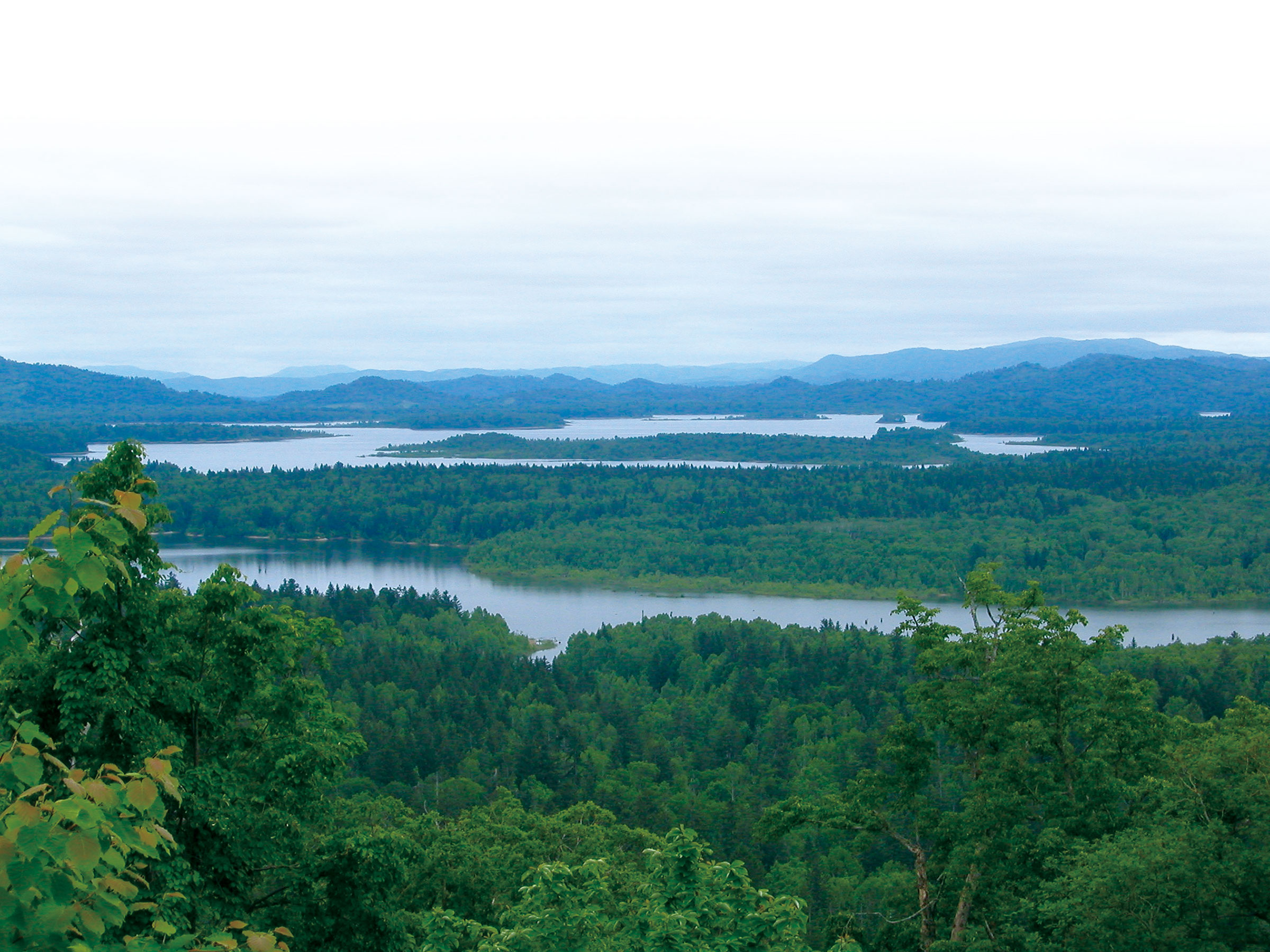
Among the experimental forests owned by Hokkaido University, the Uryu Experimental Forest is the oldest and the coldest. It provides important habitats for diverse wildlife, including endangered species such as the Japanese Huchen. The northern area surrounding Lake Shumarinai is characterized by mixed conifer–broadleaf forests, a representative forest type in Hokkaido, while the southern area consists largely of pure stands of Sakhalin spruce formed on serpentine soils.
The Uryu Experimental Forest supports education and research activities by making full use of its vast and rich forests, which are primarily composed of natural forests. Under the overarching theme of long-term integrated research on environmental change and biodiversity conservation centered on Lake Shumarinai and its watershed, long-term and large-scale field experiments and monitoring are conducted. Through these efforts, the Forest aims to clarify forest ecosystem functions and mechanisms for maintaining biodiversity, as well as to examine management approaches for northern forest landscapes that take these factors into account.
In addition, by fully leveraging its role as a field where ecosystem functions, conservation, and relationships with local communities can be studied in an integrated manner, the Forest promotes a wide range of interdisciplinary and collaborative research activities that transcend individual academic disciplines.

Certification as a Nationally Certified Sustainably Managed Natural Site
- Site name: Hokkaido University – Uryu Experimental Forest
- Location: Horokanai Town, Uryu District, Hokkaido, Japan
- Certified area: 24,953 ha (entire area of the Uryu Experimental Forest)
- Date of certification: October 25, 2023
- Biodiversity value:
- An area where primeval natural ecosystems remain
- An area that provides habitats for rare species of flora and fauna
- An area that functions to enhance buffering capacity, continuity, and connectivity of ecosystems
- Details of certification: Biodiversity map (Ministry of the Environment) (Japanese language only)
Registration in the WD-OECM
- Registered area: 24,170 ha (excluding areas overlapping with wildlife protection areas)
- Month of registration: August 2024
- Registration platform: Protected Planet
Related Links
- Uryu Experimental Forest, Field Science Center for Northern Biosphere, Hokkaido University
- 北の森林プロジェクト (Japanese language only)
Sapporo Campus
Located in the heart of the city of Sapporo, the Sapporo Campus is one of the largest university campuses situated in an urban area in Japan. The campus encompasses extensive Experiment Farm and Experimental Nursery facilities, giving it an exceptional scale despite its central urban location. While numerous educational and research buildings line the campus, diverse ecosystems—including remnants of primeval forest that represent Sapporo’s original landscape, springs fed by the underflow of the Toyohira River, and a wide variety of flora and fauna, including rare species—have been well conserved over many years. Surveys conducted to date have confirmed the presence of more than 3,000 species of plants and animals within the campus.
Green spaces such as the Central Lawn and the Elm Grove, the Sakushukotoni River flowing through the campus, tree-lined avenues of poplars and ginkgo trees, and the pastoral scenery of the university farm—where dairy cattle and sheep are grazed mainly during the summer—together with historic buildings and other architectural structures, create an open and verdant landscape rich in natural character. Within this favorable environment, the campus as a whole serves as a place for everyday academic research and environmental education. It also functions as a relaxing and welcoming space not only for students, faculty, and staff, but also for the public and many visitors.
The highlights and natural features of the Sapporo Campus are introduced in the “Hokkaido University Sapporo Campus Wildlife and Plants Guide.” (Japanese language only)

Certification as a Nationally Certified Sustainably Managed Natural Site
- Site name: Hokkaido University – Sapporo Campus
- Location: Kita-ku, Sapporo City, Hokkaido, Japan
- Certified area: 126 ha (Area excluding zones with concentrated built structures from the total campus area of 177 ha)
- Dates of certification:
- October 25, 2023 (Certified Site)
- September 16, 2025 (Certification of Enhancement Activity Implementation Plan under the Act on Promoting Activities to Enhance Regional Biodiversity)
- Biodiversity value:
- An area that provides ecosystem services
- An area that provides habitats for rare species of flora and fauna
- Details of certification: Biodiversity map (Ministry of the Environment) (Japanese language only)
Registration in the WD-OECM
- Registered area: 126 ha (entire area certified as a Nationally Certified Sustainably Managed Natural Site)
- Month of registration: August 2024
- Registration platform: Protected Planet
Related Link
- Ecological and Environment Conservation Policy (Japanese language only)
effort
Initiatives in Research, Education, and Social Co-creation
At Hokkaido University, a wide range of initiatives in research, education, and social co-creation that contribute to biodiversity conservation are carried out across both the natural sciences and social sciences, making full use of the University’s vast fields. In addition to contributing to the 30by30 target through area-based measures such as certification as Nationally Certified Sustainably Managed Natural Sites and registration as OECMs, the University also seeks to contribute to the recovery of healthy ecosystems by practicing activities that maintain and enhance the biodiversity value of the sites it owns and manages.
The Institute for the Advancement of Sustainability, based on the Hokkaido University Sustainability Declaration, works in collaboration with various departments within the University as well as with local communities, industry, and other universities, through the promotion of basic and applied research, human resource development, and the societal implementation. Through these efforts, the University strives to accelerate of a fair and equitable transition toward the realization of a sustainable society, including responding to climate change and protecting biodiversity.


