Campus Management campus management
Key Initiatives
Initiatives driven by the Campus Master Plan
Since developing the first Campus Master Plan among Japan’s national universities in 1996, Hokkaido University has remained committed to campus management. While preserving our architectural and landscape heritage, we are working toward a sustainable and hybrid campus that enables the University to continuously advance its cutting-edge education and research.
1. Architecture: Advancing Sustainable Design
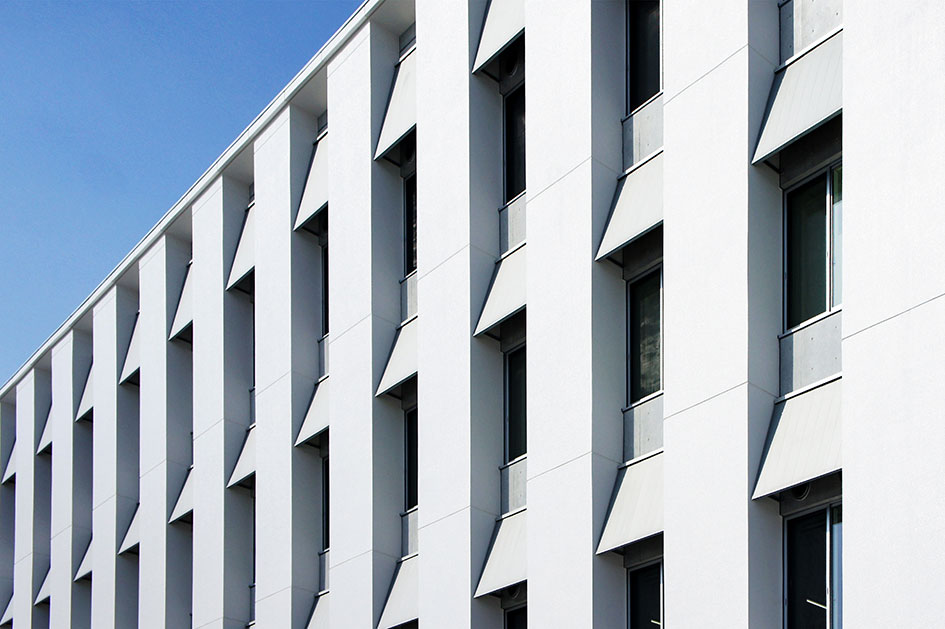
Hokkaido University is promoting sustainable architecture as part of its efforts to realize a sustainable campus. In architecture development and renovations, we achieve ZEBs (net zero energy buildings) specifications at standard costs by making full use of versatile technologies and equipment while incorporating adaptations unique to snowy, cold climates. We also place strong emphasis on preserving and restoring the university’s historic architecture, working to create a campus that harmonizes environmental sustainability with cultural heritage.
- Promoting Sustainable Architecture and ZEBs
ICReDD building (Awarded BELS certification (5-Star Rating, as equivalent to ZEB Ready)) - Preservation and Utilization of Historic Architecture
Center of Education and Research for Hokkaido Wines (Awarded the Sustainable Campus Award 2024) - Hokkaido University’s activities toward achieving carbon neutrality
2.Ecological Environment: Conservation of Campus Biodiversity
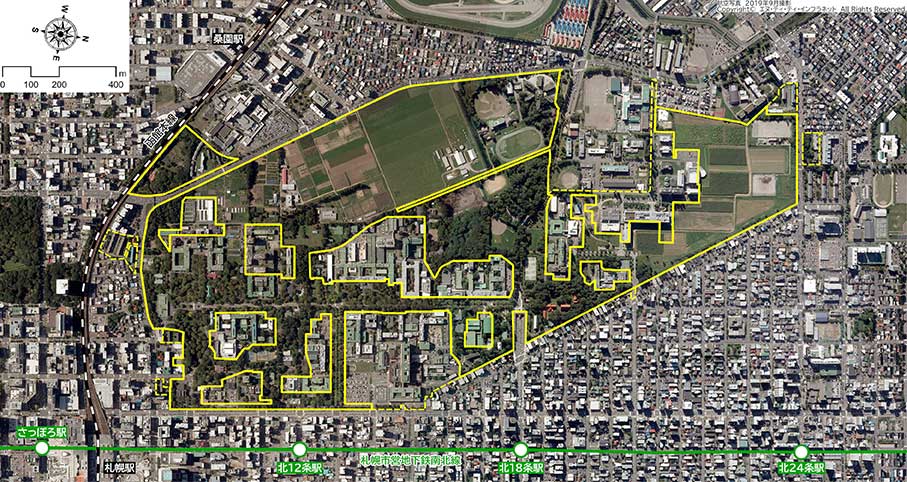
Hokkaido University manages diverse field sites, including its expansive campus and research forests totaling approximately 70,000 hectares. Through decades of education, research, and stewardship, we have contributed to biodiversity conservation. In June 2022, we joined the “30by30 Alliance for Biodiversity”, becoming the first national university in Japan to do so, promoting integrated sustainability that balances climate action and nature-positive activities.
- Hokkaido University’s activities toward nature positive
- Hokkaido University’s Policy on Ecological Environment : “Ecological Environment Conservation Policy“
3. Management: Supporting Campus Life
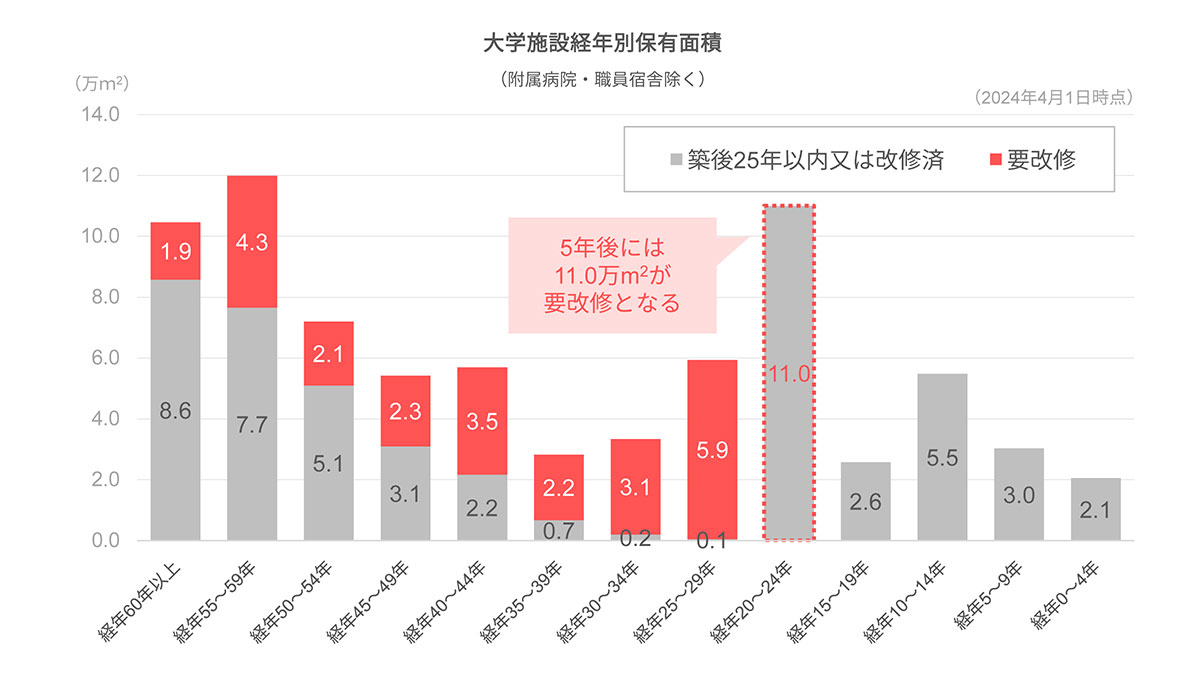
Over its 150-year history, Hokkaido University has continuously developed and managed the infrastructure that supports education and research. Today, as aging facilities require attention, planned repairs and upgrades have become essential. In response, we have formulated “Hokkaido University Infrastructure Life Extension Plan” to ensure the systematic maintenance, management, and renewal of university assets. We recognize that diligent, ongoing campus management is essential to supporting daily campus life.
- Hokkaido University Infrastructure Life Extension Plan
- Access the archive of previous activities and investigation reports here
4. Co-creation, Co-education: Creating Through Campus
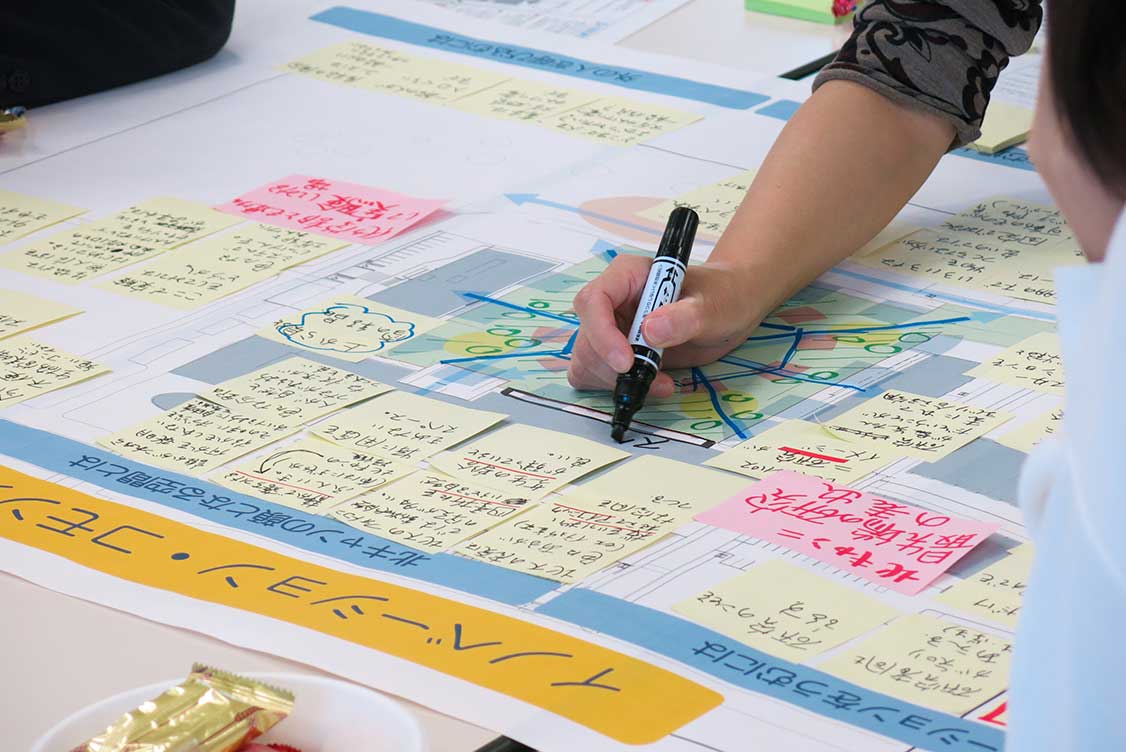
Campus management involves more than constructing and maintaining physical infrastructure; it also demands efforts that support the human activities taking place on campus. At Hokkaido University, we view the campus not merely as a physical space, but as a platform for co-creation and shared learning. Our goal is to create an environment where students, faculty, staff, and the local community learn from one another and generate new values. As part of this effort, we promote diverse initiatives that emphasize stakeholder engagement, including educational and research activities utilizing the campus, the development and operation of the Assessment System for Sustainable Campus (ASSC), and the publication of sustainability reports
- Campus-Based Education and Research Activities
- Advanced Studio on Architectural and Urban Design 1(Eng.) (Awarded the Sustainable Campus Award 2019)
- Studio Work on Landscape Architecture (Ag.)
- Assessment System for Sustainable Campus (ASSC)
- Access the library for sustainability reports and other materials here
history
Pioneer of Campus Master Planning in Japan
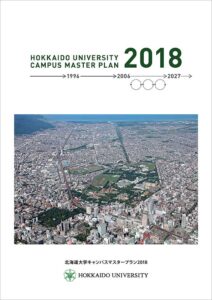
Hokkaido University Campus Master Plan 96, formulated in 1996, attracted nationwide attention as a pioneering initiative in campus master planning in Japan. Since then, through continuous campus management, the university has worked to preserve and further enhance its historic, green, and beautiful campus.
1996
キャンパスマスタープラン96 策定
2006
キャンパスマスタープラン2006 策定
2018
キャンパスマスタープラン2018 策定
archivement
Key achievements in Campus Management
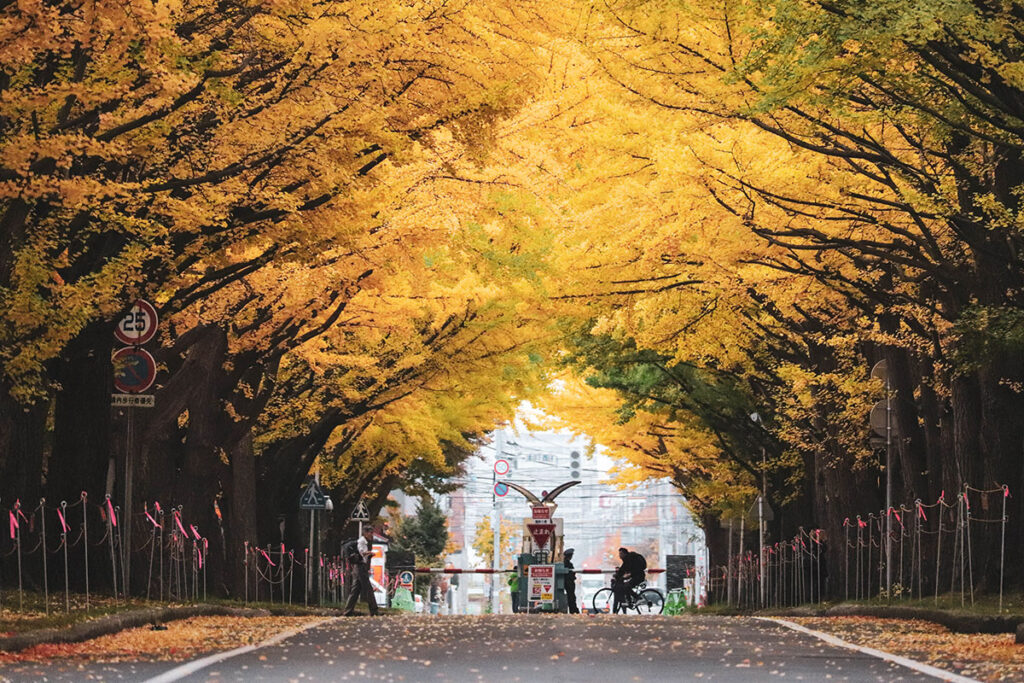
Since establishing its Campus Master Plan in 1996, Hokkaido University has consistently pursued campus management, achieving numerous achievements. These include preserving and revitalizing historic legacy such as “The Model Daily Farm” and the “Sakusyukotoni-gawa”, integrating of campus areas through the “Kanjo-dori Elm Tunnel”, and the establishment of a cutting-edge research center on the North Campus, all aimed at harmonizing tradition with innovation.
1. Legacy
Our beautiful campus, renowned for its greenery and historical significance, is not only central to education and research but also a valued part of the local community. We are committed to preserving this valuable environment and passing it on sustainably to future generations.
- Conservation and succession of Hokkaido University’s historic green campus landscapes
- Setback regulations for main avenues under the Campus Master Plan
- Zoning under the Ecological Environment Conservation Policy
- Awarded the 7th Sapporo Environmental Award, 2015
- Certified as ”The Heritage of Landscape in Hokkaido” by the Japanese Institute of Landscape Architecture (2010, 2017)
- Preservation and utilization of historic architecture
- The Model Daily Farm (Awarded the 8th Seismic Retrofit Excellent Building Award, 2018)
- School of Agriculture Main Building (Awarded the 19th BELCA Award, 2009)
2. Regeneration
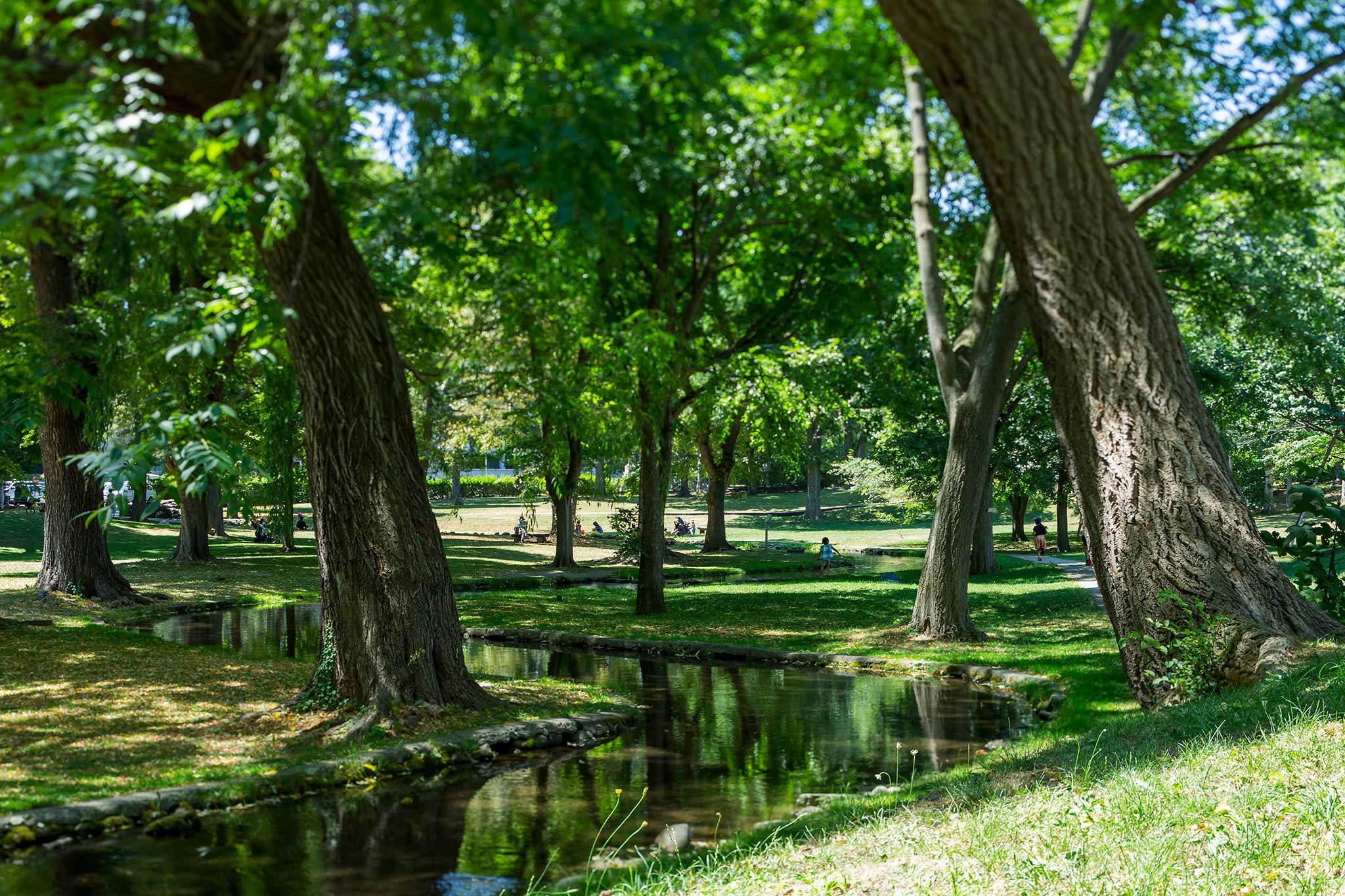
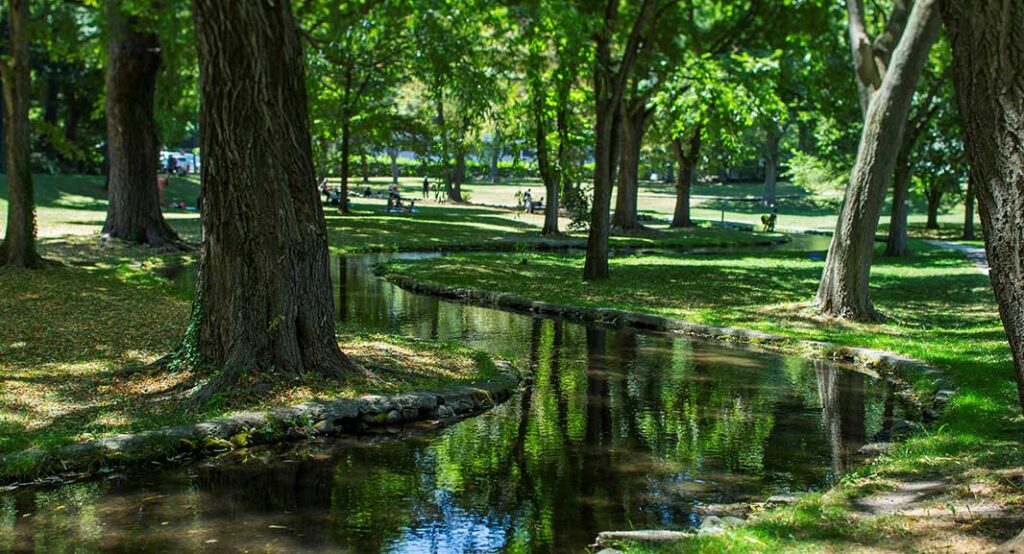
Once diminished and partially filled in by urban development, the “Sakusyukotoni-gawa” was designated for restoration under the Campus Master Plan. In 2004, its flowing waters returned for the first time in almost half a century. Ecological regeneration strengthens the campus’s appeal and reflects a vital commitment to sustainable coexistence with nature.
3. Development
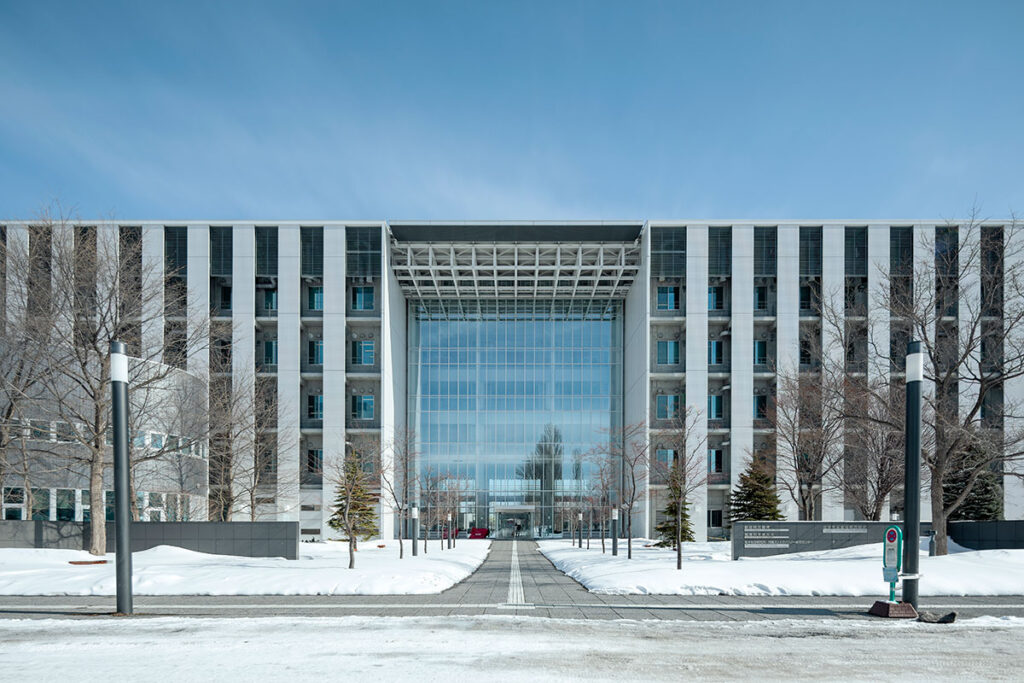
At Hokkaido University, we place strong emphasis on preserving the legacy of our historic campus while architecture an environment that enables cutting-edge education and research. Key initiatives include the development of cutting-edge research hubs on the North Campus (Sapporo) and the construction of the Innovation Commons, all aimed at fulfilling our university’s vision.
4. Operations
The Campus Master Plan emphasizes not only physical elements such as buildings and infrastructure, but also the essential initiatives required for their implementation and operation. Through projects such as creating assessment systems and building collaborative networks, the university has taken a leading role nationwide.
- Development Assessment System for Sustainable Campus (ASSC)(2013年~)
(Awarded the Sustainable Campus Award 2015) - Building Sustainable Campus Networks (e.g. Founding Member of CAS-Net JAPAN)